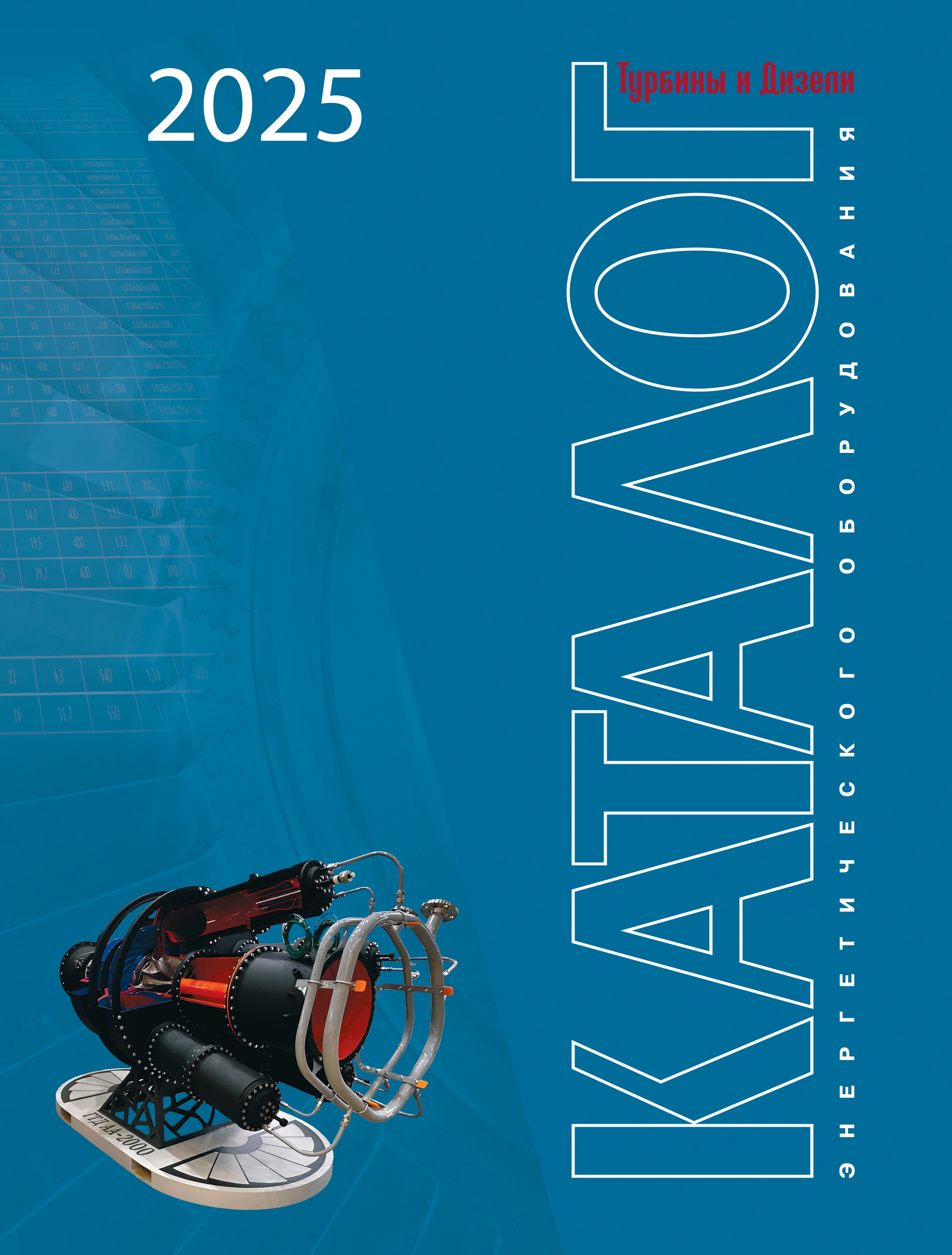
IN BRIEF 4-2025
6 A solid foundation for the Ural school of turbine engineering
The reliable operation of complex dynamic equipment–gas and steam turbines, compressors–depends on the depth and quality of the research base. The founders of the Ural turbine school should be considered a number of highly qualified specialists who came to the Urals and worked here in the late 1930s and early 1940s: D.P. Buzin, N.Ya. Bauman, N.G. Moloshny, A.V. Sakhnin, E.I. Benenson, P.E. Tkhor, L.S. Ioffe, A.V. Rabinovich, V.F. Yanchenko, M.M. Kovalevsky, B.S. Revzin, A.M. Danilchenko and many others. It was these specialists, bringing with them the best traditions of Leningrad and Kharkov turbine builders, who laid the foundation for the Ural turbine school. They built the Ural Turbine Works, while simultaneously developing designs for new turbines that had fundamental advantages over similar machines from other manufacturers.
12 Ural Vibration Laboratory: 10 years of progress and development
Modern energy challenges require significant quantitative and qualitative transformation of approaches to ensuring reliability and maintaining the technical condition of turbine units, namely, personalization of maintenance and repair approaches with the creation of unified end-to-end approaches to life cycle management. The response to this request was the formation of an engineering consortium of companies, the core of which was the scientific and production enterprise Ural Vibration Laboratory (ULV NPP). The company has established itself as an expert in the field of monitoring, diagnostics, and adjustment of turbine equipment, as well as engineering. Since its founding, the company's team has successfully tackled various engineering and scientific challenges arising during the life cycle of turbine, compressor, and pump equipment.
14 Integrated approach to energy supply: efficiency without dependence on imports
Today, the domestic energy sector faces a number of challenges: growing consumption of electricity, the need for reliable power supply to remote areas (Arctic, Far East), the need to modernize worn-out grid capacities, dependence on foreign technologies, sanctions restrictions on supplies of critical equipment, and tougher requirements for energy efficiency.
18 Development of software for thermal calculation of heat recovery boilers for gas turbine engines
Traditional methods for calculating waste heat boilers for gas turbine engines with external supply are highly labor-intensive and inaccurate. A software package in Python has been developed to automate the thermal calculation of waste heat boilers for gas turbine units with an emphasis on determining the fuel combustion temperature.
The proposed solution is based on regression analysis of experimental data using i-t-diagrams, which made it possible to derive mathematical models for theoretical and balance temperatures. The dependence of the thermophysical properties of air and fuel on temperature is considered. Verification on four types of M-40 fuel oil confirmed the accuracy: deviations from the standard methodology do not exceed 0.33%, the determination coefficients of the mathematical models were 0.975 and 0.997. In general, this software accelerates the process of designing power facilities and increases the efficiency of thermal processes.mination coefficients of the mathematical models were 0.975 and 0.997.
Overall, this software speeds up the design process for energy facilities and improves the efficiency of thermal processes.
24 Effect of the air filtration system on hot gas path components in gas turbines
Power plants based on combined cycle gas turbines account for at least 20% of the generating capacity of the Russian Federation, and most of them use foreign-made gas turbines. With the end of payments under capacity supply agreements, the income of generating companies is decreasing, while the costs of medium and major repairs are growing. The most expensive to repair and maintain are the elements of the hot part of the gas turbine.
Their service life is one of the main problems in the operation of the gas turbine, since about half of the costs of technical maintenance and repair of the gas turbine can be attributed to the costs of major repairs, as well as the restoration and replacement of these expensive parts. Russian enterprises have established processes for the restoration and production of individual components using reverse engineering. Nevertheless, a significant part of them is still supplied from abroad through parallel imports, which leads to an increase in their cost by 2-3 times.
This article discusses the main mechanisms of wear of gas turbine blades and their protective coatings, such as thermal barrier coatings, anti-corrosion coatings. It has been revealed that it is the erosive wear of blades and their protective coatings that is the primary cause of other types of wear, such as overheating and metal corrosion. Erosive wear is caused by foreign particles that have entered the flow part of the gas turbine unit together with the air taken from the atmosphere.
30 Ural Vibration Laboratory: monitoring and diagnostics as one of the foundations of reliable equipment operation
In October, Ural Vibration Laboratory celebrates its 10th anniversary. The company is well known in the industry, especially among enterprises operating technically complex turbine equipment. Mikhail Aleksandrovich Biyalt, CEO of Ural Vibration Laboratory LLC, spoke about the company's development, operating principles, new developments, and much more. Issues related to equipment diagnostics and adjustment, the level of implementation of new technologies in Russian industry, and import substitution were also raised, and the most promising projects in the industry were discussed.
34 Aspects of momentary suspension of turbomachinery working blades
The article is devoted to the problem of reducing vibration in turbomachinery rotors by optimizing moment weighing and the arrangement of rotor blades. It examines the design and manufacturing causes of unbalance.
Two primary methods for measuring the static moment of blades are considered–absolute and relative–along with their advantages, disadvantages, and the impact of blade design features (e.g., the presence of locking inserts, integrally-milled shrouds) on the final quality of the arrangement.
Traditional algorithmic and modern probabilistic arrangement methods are analyzed in detail, with the latter demonstrating several orders of magnitude better efficiency in minimizing residual imbalance.
The capabilities of modern software for automating the process and performing multi-criteria optimization are also presented.
The influence of an asymmetric blade arrangement on the stress-strain state of the disk is separately examined, highlighting the advantages of asymmetric schemes for improving reliability.
42 Analysis of mechanical properties of anti-friction materials for hydrodynamic plain bearings
With Western service companies leaving Russia and a lack of reliable information about the properties of traditional Babbitt alloys, the problem of selecting reliable bearing materials for equipment operation under increased loads and temperatures has become more acute. The use of common domestic Babbitt brands (B83, B16, etc.) often does not provide the required level of reliability: the alloys are prone to overheating, plastic deformation, and premature wear.
An alternative is polymer composite materials (PCM), which are characterized by high wear resistance, stable properties, and an extended operating temperature range (up to 250 оC). The article presents the results of comparative studies of the mechanical properties of industrial PCMs and babbitt alloys (B83 and B16 and the foreign analogue TEGOSTAR 738) in the temperature range 80...180 оC.
The results showed that PCMs significantly outperform babbitt alloys in all studied indicators. Analysis of the imported TEGOSTAR 738 confirmed the absence of fundamental advantages over domestic alloys, which calls into question the advisability of its use given its high cost and limited availability.
For practical use, coefficients of excess strength and hardness characteristics of PKM relative to B83 babbitt have been proposed, and equivalent temperatures at which the materials demonstrate equal strength and hardness values have been determined.
50 Diagnosis of rotor rubbing against stator components in turbine units
The article is devoted to the diagnosis of rotor rubs against stator elements in turbo-generators. The primary focus is on the analysis of the causes of rubs, which the authors classify into three groups: assembly errors, deviations in the thermal expansion system, and irregularities during start-up operations. It is emphasized that the key consequence of rubs is the occurrence of a thermoelastic rotor bow, which is identified by an increase in bearing vibration and rotor runout readings.
The earliest and most accurate diagnostic indicator of rubs is a rise in high-frequency vibration.The article presents practical experience in identifying and localizing rubs and assessing potential consequences. Based on the analysis of practical data, differences in the manifestation of radial and axial rubs are demonstrated. The prospects for the development of diagnostic protocols for commissioning and operational specialists, as well as algorithms for the automatic detection of rubs, are outlined.
60 Issues and prospects for brush seals in turbine engineering
The modern development of turbine engineering is directly linked to increases in the temperatures and pressures of working media, increases in rotor speeds, and reductions in the gaps between rotating and stationary parts of the machine. These measures are primarily aimed at increasing efficiency and specific power, improving economy, and reducing the environmental impact of rotary machines. The design of new and modernization of existing sealing units for rotary machines is one of the most important tasks for achieving these goals while meeting the requirements for reliability, safety, and durability. One of the problems with the use of brush seals in Russia is the complexity of their commercial production.
All attempts to find a working technology have been unsuccessful. The experience of foreign companies shows that it takes at least five years to achieve the desired result. This involves conducting fairly complex research and development work. Naturally, the technologies obtained are not disclosed. Based on its experience in the production of cellular seals, the Russian company Rotek KM has developed the first cost-effective technology for the production of brush seals.
64 Technical specifications for the Irtysh series GPU with a capacity of 16 MW have been approved by Gazprom PJSC
The construction of international gas pipelines and compressor stations for various purposes based on Russian equipment and components guarantees the country's reliability and independence in the energy sector, mechanical engineering, and many other areas of industry.
A trial batch of brush seals manufactured entirely in Russia will be produced in the near future. Non-standard methods of calculation and machine design were used to enable such complex technological processes.
68 Reverse engineering as a tool for new product development
The article examines reverse engineering as one of the common tools for new product development. It highlights the importance of achieving independent or unique results in the development process from the standpoint of compliance with intellectual property rights legislation. Particular attention is paid to the analysis of risks arising when working with complex structures and equipment, where ignoring key aspects (functional purpose, operating conditions, limitations) can lead to non-compliance or a de facto absence of results. The key stages of work are described: from system analysis and requirements formation to testing, development of design documentation, and simulation modeling.
The article emphasizes the importance of the performer's experience and specialized expertise, as well as the necessity of thorough pre-project analysis to define the boundaries of responsibility, the scope of work, and the selection of appropriate methodologies and approaches during development.
The article also addresses the issues of the feasibility and rationality of using reverse engineering compared to direct design and explores its application for various types of enterprises (manufacturing, operating, service).
76 Ural-6000 power units for the Sredne-Nazymsky Oil and Gas Condensate Plant
Power plants for own needs at oil and gas fields significantly reduce the customer's costs for the production of electrical and thermal energy. Consumers are reliably supplied with energy with the necessary degree of system reliability and redundancy. The use of natural and associated petroleum gas produced at the field as fuel significantly improves the environment. At the Sredne-Nazymskoye field located in the Khanty-Mansi Autonomous Okrug.
80 Overview of practical and theoretical aspects of turbo unit rotor alignment
The article provides a comprehensive analysis of practical and theoretical aspects of turbomachinery rotor alignment. It examines the impact of alignment on equipment reliability, including the emergence of alternating stresses in rotors, loads on flange connections and fitted bolts, and changes in the operating conditions of plain bearings. Special attention is paid to alignment calculation and monitoring methods, including the use of hydrostatic and laser leveling, as well as accounting for operational factors such as thermal deformations and foundation settlement.
Using specific turbomachinery examples, the consequences of incorrect alignment and methods for their mitigation are demonstrated. The necessity of an individualized alignment approach, considering the design features of each turbomachinery unit to ensure it’s dynamic reliability and longevity, is emphasized.
90 Experimental study increased vibrations of hydro turbine covers during the flood period
The phenomenon of annual increased vibrations of turbine head covers on low-head HPP is described. A notable feature of these vibrations is their seasonal variability: an unacceptable range of vibrations is recorded only during the spring flood, from mid-March to mid-April. To identify the cause of the increased vibrations of turbine head covers, the vibration signals recorded during full-scale tests are analyzed for their frequency and amplitude, taking into account the operating modes of the hydraulic units. It is shown that all standard hypotheses (incorrect adjustment of gate-blade relationship, intensive cavitation processes in the flow path, influence of wicket gate blades) cannot satisfactorily explain the phenomenon of seasonal increase in vertical vibrations of the turbine head covers. In this regard, a hypothesis is proposed of a standing wave formed in the flow path of the hydraulic turbine between the high and tail waters. The length and, accordingly, the frequency of the standing wave change depending on the high and tail waters. According to the analysis carried out in the paper, from mid-March to mid-April the high and tail waters are such that the frequency of the fourth harmonic of the standing wave is close to the natural frequency of the turbine head cover, and this, in turn, leads to the phenomenon of dynamic amplification of vibrations and a sharp increase in the amplitude of the vertical vibration.
98 Development of a multi-criteria method for selecting gas piston units under sanctions pressure
The current geopolitical situation and the introduction of restrictive measures have created unprecedented challenges for Russia's energy infrastructure. Ensuring energy security requires a rethink of approaches to decentralized energy supply, where gas piston units (GPUs) play a strategically important role. The key problem has been the technological backwardness of domestic power engineering and critical dependence on imported equipment.
Sanctions restrictions in 2022–2023 have significantly complicated the supply and maintenance of foreign GPUs from leading manufacturers (INNIO Jenbacher, MWM, Caterpillar, MTU, Mitsubishi). In these conditions, the development of a scientifically based method for selecting GPUs, integrating the assessment of technical and economic parameters, risks of sanctions pressure, import substitution opportunities, and adaptability to specific types of fuel, becomes a pressing task. The article presents the development of a multi-criteria method for selecting gas turbine units for various categories of consumers, ensuring objectivity, sanction resilience, fuel efficiency, and economic feasibility. The Analytic Hierarchy Process (AHP) is a mathematical tool for a systematic approach to decision-making. The method aims to overcome the methodological vacuum in the field of comparative analysis of Russian and foreign power plants in the new foreign policy realities.
102 Structural modernization of steam turbines combating moisture and leaks as a way to increase efficiency
Despite their efficiency, thermal power plants still face limitations imposed by the second law of thermodynamics; in other words, they cannot convert all incoming energy into useful work. Modern thermal power plants typically achieve efficiencies of between 35 and 49%. This, in turn, brings to the fore issues related to the optimisation of steam turbine designs, which power thermal power plants, with the aim of improving their economic and energy efficiency. Along with the development of new heat-resistant ferritic steels, the efficiency of turbines is currently being increased through the introduction of advanced approaches to steam path design. Also noteworthy are the achievements in the development of longer blades for the last stage, which further reduce outlet losses. With this in mind, the article discusses promising engineering solutions aimed at improving the design of steam turbines, which solve the problem of moisture and leaks, thereby contributing to an increase in efficiency. Thus, special attention in the research process is paid to a design innovation that solves the problem of leaks in the turbine channel before extraction, arising from the formation of vortex zones, intense mixing processes and flow blockage in heat exchangers. In addition, the proposal of domestic scientists regarding the improvement of the design of the arrangement around the entire perimeter of the outer meridian bypass of the stator part of the sequential channels of the turbine is described in detail.
108 III Conference on Resource Conservation and Improving the Reliability of Gas Turbine Units and Compressor Equipment
The conference was traditionally held in August at the CCTI NGO site. It was dedicated to improving the efficiency of air preparation at the inlet to the compressor of a gas turbine engine and lubricating fluids for gas turbine engines, reducing operating costs, and increasing the reliability of hydraulic systems and compressor equipment.
 Русский
 English